 Scottsdale Sewer Line Repair And Replacement Contractor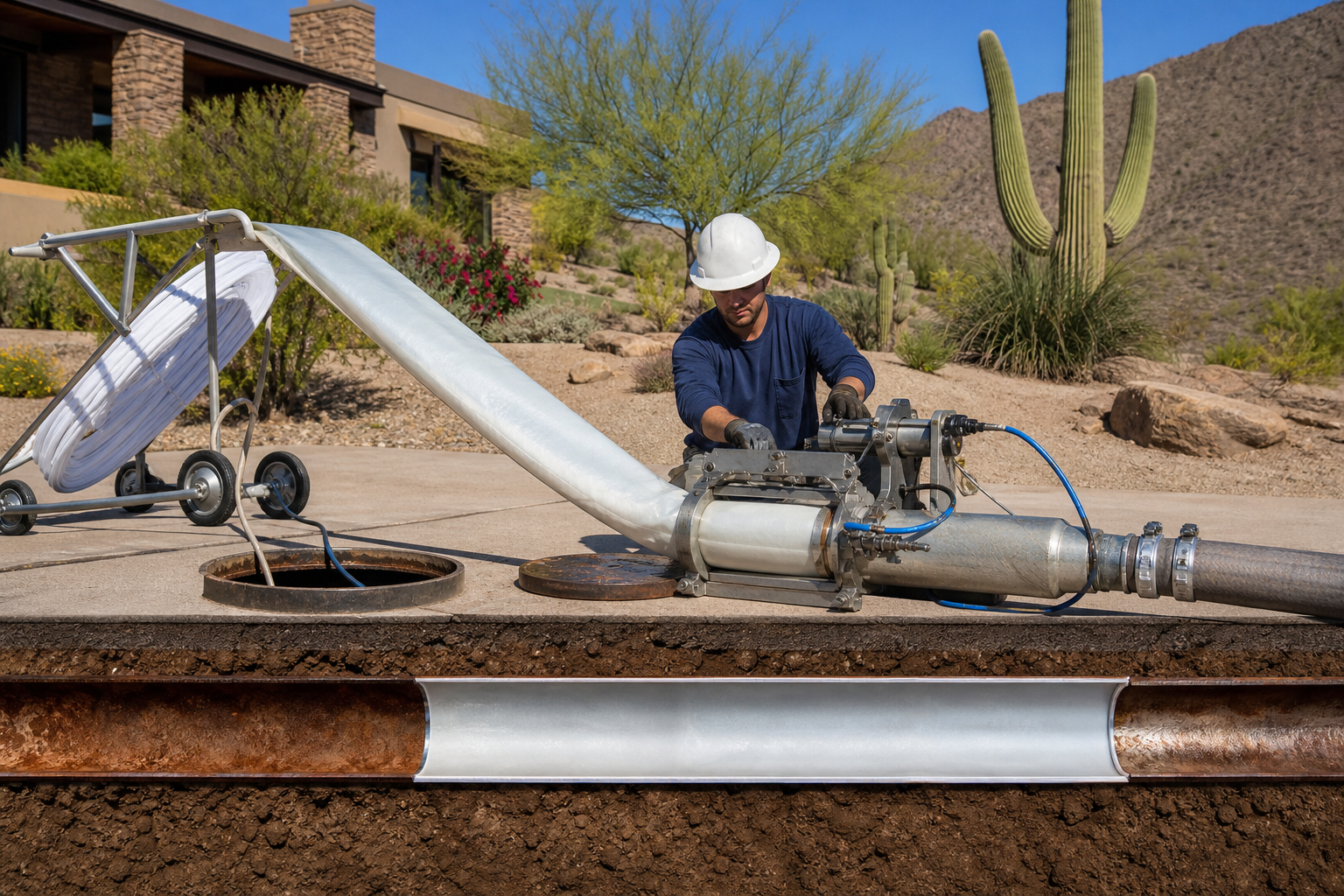
How Pipe Relining Works
A flexible liner coated in resin is inserted into the damaged pipe through an access point, typically an existing cleanout. Once positioned, the liner is inflated against the interior walls of the old pipe and left to cure, hardening into a new pipe-within-a-pipe structure that seals cracks and smooths out interior surfaces.
Ideal Situations for Relining
Relining works well for pipes with multiple small cracks, minor root intrusion, or general wear that hasn't caused structural collapse. It's particularly useful for lines running under driveways, patios, or mature landscaping where excavation would be disruptive or costly to restore.
Assessing Pipe Condition Before Relining
Not every damaged pipe is a good candidate for relining. We perform a camera inspection first to check for collapsed sections, significant misalignment, or diameter changes that could interfere with proper liner placement. Pipes in reasonably stable condition with localized damage tend to respond best to this method.
The Relining Process
After confirming suitability through inspection, the pipe is cleaned thoroughly to remove debris, roots, and buildup. The resin-coated liner is then inserted and positioned using the access point, inflated to press against the pipe walls, and cured either with heat, UV light, or ambient conditions depending on the resin type. Once cured, we run a follow-up camera inspection to confirm proper placement and integrity.
Benefits and Limitations
Relining reduces excavation, preserves landscaping, and can extend the usable life of an aging pipe. However, it does slightly reduce the interior diameter of the pipe and isn't suitable for severely collapsed or misaligned sections, which may require trenchless replacement or traditional excavation instead.
Related Services
Relining pairs naturally with sewer camera inspections for assessment and follow-up verification. For pipes too damaged for relining, we offer trenchless sewer repair and sewer line replacement as alternative solutions.
Preparing for a useful project conversation
Before contacting Scottsdale Arizona Sewer Line Repair & Replacement, note the property type, the parts of the project that concern you, your preferred outcome, and any access or scheduling considerations related to Sewer Pipe Relining in Scottsdale, AZ. Photos and approximate measurements can provide helpful context, while an on-site assessment may still be needed before the scope is finalized. Include the property location in or near Scottsdale, AZ so the request can be organized with the correct service-area information.
Frequently asked questions
How long does a sewer pipe relining typically last?
A properly installed liner can provide many years of reliable service, though actual longevity depends on the underlying pipe condition and usage patterns.
Does relining reduce the flow capacity of my pipe?
The liner does slightly reduce interior diameter, but the smoother surface it creates often helps maintain or even improve overall flow compared to a damaged, rough-walled pipe.
Can relining be done on any type of sewer pipe damage?
Relining works best on pipes with cracks or minor structural issues. Severely collapsed or heavily misaligned pipes usually need a different repair or replacement approach.