 Scottsdale Sewer Line Repair And Replacement Contractor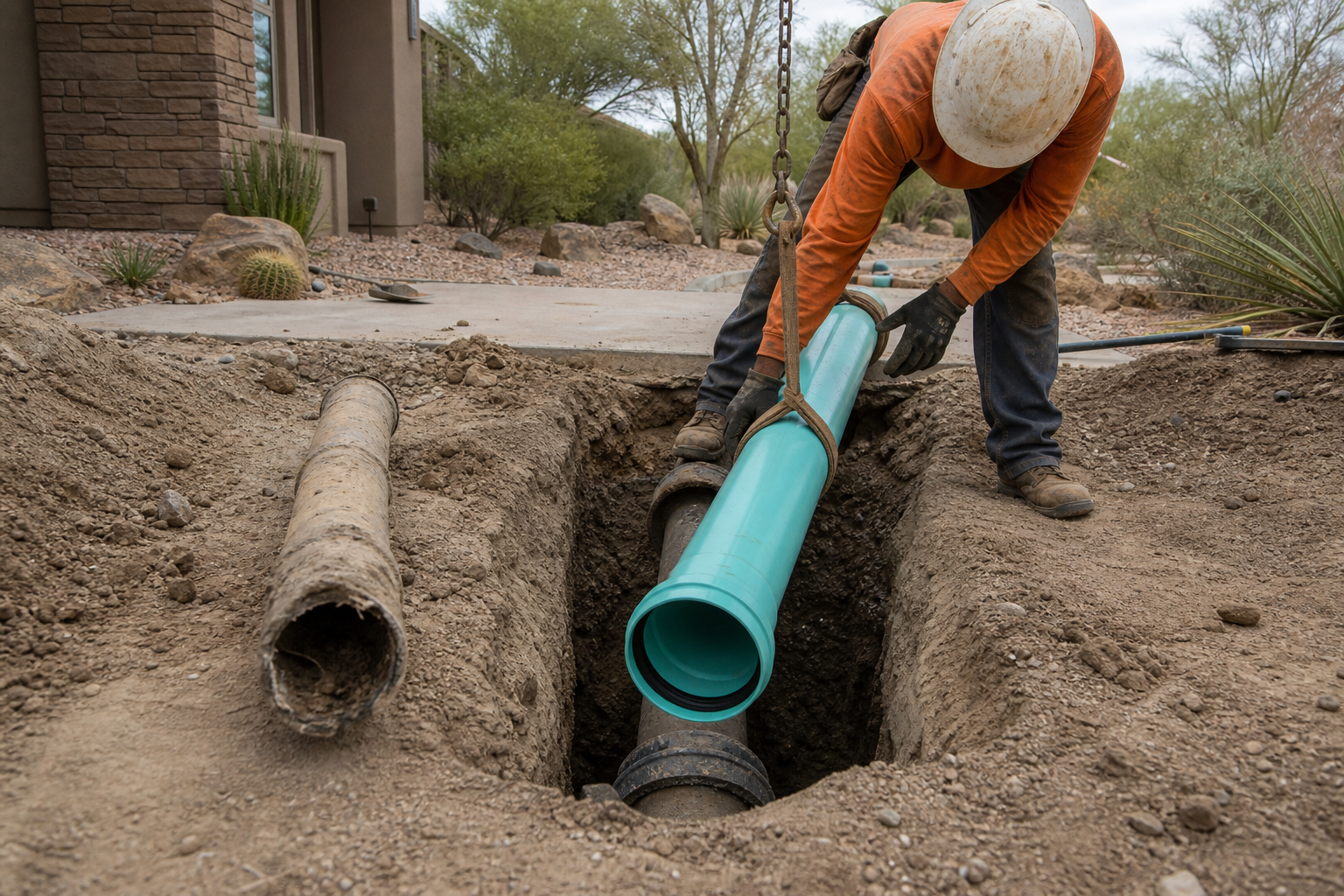
Signs Your Sewer Line Needs Replacement
Older homes in the Scottsdale area may still have original clay, cast iron, or Orangeburg piping that has reached the end of its functional life. Indicators for replacement include recurring backups despite repairs, multiple collapsed sections, extensive root infiltration throughout the line, or a pipe so corroded that patching is no longer practical. Camera inspection footage often reveals the true condition of the pipe interior, guiding the decision toward full replacement.
Choosing the Right Pipe Material
Modern replacement options include PVC and HDPE piping, both known for resistance to root intrusion and corrosion. We consider factors like soil composition, pipe depth, and expected load when recommending a material. The goal is a replacement system that performs reliably for years without requiring repeated repairs.
Traditional vs. Trenchless Replacement Methods
Depending on the layout of your property, access points, and the condition of the surrounding area, we may recommend traditional open-trench excavation or a trenchless replacement method such as pipe bursting. Each approach has tradeoffs in terms of disruption, cost, and speed, and we walk through the options so you understand what to expect before work begins.
What the Replacement Process Involves
We begin with a full camera inspection to map the existing line and identify all problem areas. Next, we plan the excavation or trenchless path, coordinate any necessary utility locates, and remove the damaged pipe. New piping is installed, connected to existing fixtures and the municipal line, then tested for proper flow and sealed connections before backfilling or restoring the trenchless access points.
Preparing Your Property
Before replacement begins, clear vehicles, furniture, or landscaping equipment from the work area. If excavation is planned, we'll discuss which parts of your yard or driveway will be affected. Let us know about sprinkler systems, buried cables, or other underground features you're aware of so we can plan around them.
Post-Replacement Considerations
After installation, we test the new line thoroughly and may perform a follow-up camera inspection to confirm proper installation. Any excavated areas are restored as close to original condition as reasonably possible, though landscaping regrowth and surface settling can take time.
Related Services
If only part of your line is compromised, sewer line repair or sewer pipe relining may be more appropriate and cost-effective. We also offer sewer camera inspections to assess pipe condition and trenchless sewer repair for less invasive alternatives to full replacement.
Frequently asked questions
How do I know if my sewer line needs full replacement instead of repair?
If the pipe shows widespread deterioration, repeated failures in multiple locations, or is made of outdated materials prone to breakdown, replacement is usually the more reliable long-term solution.
Does sewer line replacement always require digging up the yard?
Not necessarily. Trenchless methods like pipe bursting can replace a line with minimal surface disruption in many cases, though some site conditions still require traditional excavation.
What pipe material is best for a replacement in Scottsdale soil conditions?
PVC and HDPE are commonly used for their durability and resistance to root intrusion, though the best choice depends on your specific site conditions and pipe depth.